

Sweden Update: The Work I Have Been Moving Toward
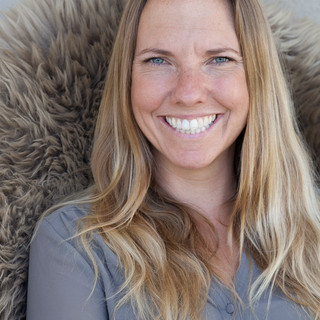

I have now been in Sweden for three weeks, and the reason I felt called to come here is beginning to take form.
I arrived at Vita Krala expecting this experience to help me understand whether I was meant to create and operate a property of my own. Instead, living and working here has shown me something larger.
Running one property myself may not be the highest and best use of everything I have learned. It could actually limit the number of people, properties, and communities I am able to serve.
My role may be to help many properties recognize what they already hold, bring their essence into clearer form, and transition into places that genuinely restore people.
For the first time, I have language for the work I have been moving toward throughout my entire career.
Finding a Name for the Work
I have spent most of my life in and around construction, building, development, design, and the creation of businesses and physical spaces.
Later, when I left the United States for Central America, that experience began evolving into work with wellness centers, retreat properties, and places trying to become something more than conventional hospitality businesses.
At the time, I described some of that work as activating wellness properties. I could see the potential in the land, the buildings, the guest experience, the nutrition, the atmosphere, and the people behind them. I could also see where the vision was not yet fully translating into reality.
But the language never felt complete.
Over the course of my career, my work has expanded through construction, business development, design, hospitality, branding, environmental wellness, nutrition, fasting, herbal medicine, homeopathy, photography, marketing, and the study of what allows the human body and nervous system to feel safe enough to rest and repair.
These pursuits may have appeared separate from the outside, but they were continually leading me toward the same question:
What makes a place truly restorative?
Not simply beautiful.
Not simply luxurious.
Not simply marketed as wellness.
But a place that allows someone to exhale, soften, sleep deeply, receive real nourishment, reconnect with nature, and remember themselves.
The name I now have for this work is restorative hospitality.
A Different Kind of Hospitality
Restorative hospitality is not wellness hospitality dressed in softer colors.
Much of the wellness industry still mirrors the same consumer culture found in conventional luxury travel. Guests are offered more treatments, more workshops, more upgrades, more activities, and more things to schedule.
Restoration does not always come from adding more.
Often, it comes from removing what overwhelms us.
It may be found in quiet mornings, natural light, clean air, restorative sleep, nourishing food, thoughtful materials, time outdoors, limited technology, and permission to do very little.
Stillness can be an amenity.
Nothingness can be part of the experience.
A restorative stay does not require a large spa or a packed retreat schedule. The property itself can become the restorative experience.
Nutrition can be treated as a foundation rather than simply another dining amenity. Depending on the purpose of a stay, that might include nourishing meals, simplified food, seasonal ingredients, herbal preparations, fasting, or intentional digestive rest.
The physical environment can support the body instead of asking it to continually adapt to artificial light, noise, fragrance, chemicals, technology, and overstimulation.
There are already places offering pieces of this. Some are deeply rooted in land, nutrition, simplicity, traditional healing practices, community, craft, or nature. Others are almost there but need clearer language, stronger design, more cohesive communication, or a final layer of refinement.
Restorative hospitality gives these places a name and a context.
What Vita Krala Has Shown Me
My time at Vita Krala has given me the opportunity to put this work into practice.
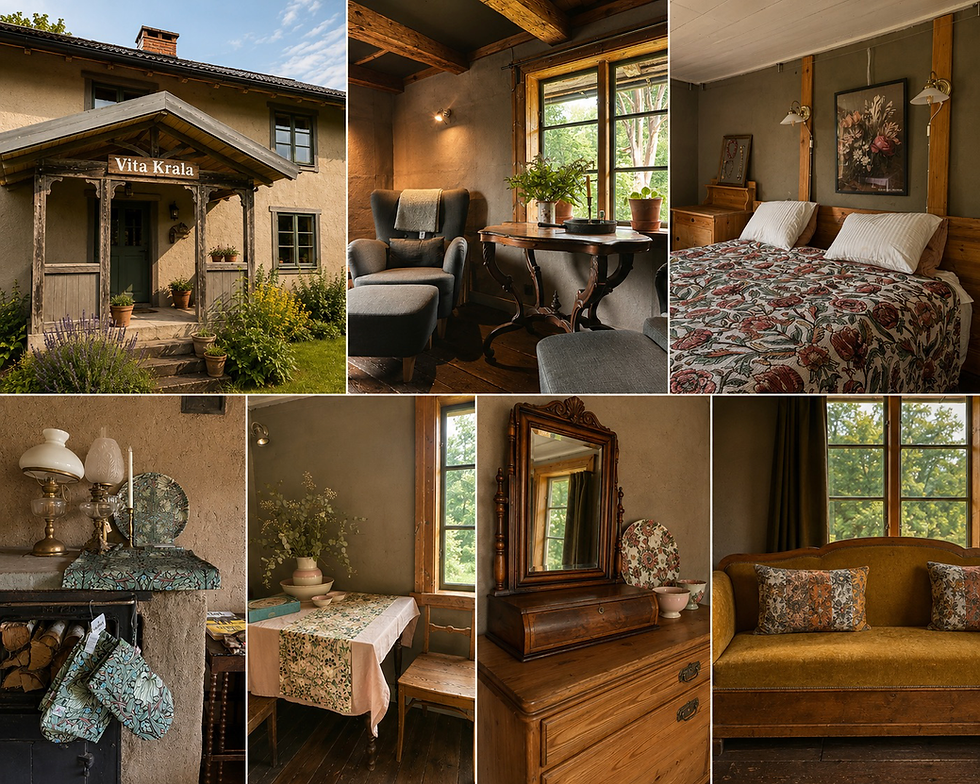
Chris has spent approximately twenty years creating this place. The depth was already here: the gardens, the food, the rooms, the landscape, the handmade products, her knowledge, and the feeling of being welcomed into a real home and working farm.
But the website and visual identity did not fully reflect the quality or character of what she had created.
My role was not to invent a new story for Vita Krala. It was to recognize the story already here and help make it visible.
That work has included photography, branding, logo development, product labels, website design, written content, guest offerings, social media strategy, and a complete visual brand guide.
It has also meant experiencing the property as a guest might.
I have photographed breakfasts made with ingredients from the garden, walked through the surrounding forests, and spent time beside the nearby lake where Chris keeps a canoe ready for guests to rent. In moments like these, the real value of the property becomes clear. It is not about filling every hour. It is about giving someone access to a quieter rhythm of life.
Looking at Vita Krala as a whole has raised a different set of questions.
How does a guest first discover it?
What do they understand when they arrive on the website?
Does the visual identity match the feeling of the property?
Are the meals, rooms, activities, and seasonal experiences described honestly?
What details create trust?
What helps someone understand that this is not simply another bed and breakfast, but a place with a distinct spirit?
This is the work I love.
It moves between intuition and strategy, vision and implementation, the smallest visual detail and the larger purpose of the business.
A Lifetime of Skills Becoming One Offering
It is remarkable how finding a clear purpose can make every seemingly unrelated chapter of your life look like preparation.
Spending most of my life in construction taught me how buildings and properties function, how to solve problems in the physical world, and how an idea becomes a tangible place.
Building and managing businesses taught me to see operations, finances, staffing, systems, risk, and opportunity.
Development and design taught me to recognize potential before it is obvious.
My work with wellness centers and restorative environments taught me that an attractive property is not automatically a healing environment.
My years of studying nutrition, fasting, herbal medicine, homeopathy, environmental health, and the nervous system taught me to understand restoration as a whole-person experience.
Photography, branding, websites, social media, and marketing gave me the tools to communicate the essence of a place to the people looking for it.
Together, these experiences have taught me that a guest’s ability to rest is shaped by far more than décor or amenities.
Light, sound, air, materials, nutrition, fragrance, technology, pace, human interaction, and the overall feeling of a place all matter.
Earlier in my career, I hired separate creatives and consultants to accomplish many of these tasks. Over time, I learned to do much of the work myself. With AI now supporting my creative process, I can move from strategy to visual identity, writing, website development, and implementation with a speed and cohesion that once required an entire team.
My services may continue to evolve, but the core is becoming clearer.
I help people and properties uncover what they are truly here to offer and bring that vision into form.
I am weaving a lifetime of skills into one central offering: helping properties become places that support genuine restoration.
The Beginning of Sanctuary Found
While working on Vita Krala, I also began creating a new platform called Sanctuary Found.
It started as a place to document and share properties that embody the qualities I have been trying to describe.
But I believe the seed is larger than a social media account or travel collection.
Sanctuary Found is becoming a home for the emerging language of restorative hospitality.
It is for places already doing this work, even when they do not yet know what to call it.
It is for property owners who sense that guests are seeking something deeper than luxury, entertainment, or a full itinerary.
It is also for travelers who are not looking for more things to do, but for somewhere they can truly rest.
There are people searching for these places without knowing exactly what they are searching for.
There are also properties ready to offer them but still missing the language, structure, design, or visibility needed to be found.
Sanctuary Found is intended to help connect those two worlds.
What Comes Next
My Journal here will become the place where I share this work as it unfolds.
I will document projects like Vita Krala, the evolution of Sanctuary Found, and the process of developing my own land in Idaho. That may include setting up the tipi, building a shed, creating an outhouse and underground food storage, and continuing to explore what it means to create sanctuary through simple, natural, and thoughtful systems.
My Substack will remain the more editorial home for the ideas behind this work, including my ongoing essay series on restorative hospitality.
One will show the process.
The other will explore the philosophy.
I do not yet know exactly where every part of this will lead, but I can see the direction more clearly than I could three weeks ago.
I thought I may have come to Sweden to learn how to create one restorative property.
Instead, I may have come here to understand how I can help create many.


Comments