

Mold, Terrain Theory, and the Toxicity of Modern Building Materials
Updated: Jul 22
I recently listened to Episode 239 of The Way Forward with Alec Zeck, titled “A New Way to Heal: Terrain, GNM & Chronic Illnesses with Liev Dalton & Jacob Diaz,” and it finally gave language to something I’ve been observing for years: what we call “mold sickness” may not be about mold alone.

You can listen to the episode here:https://thewayfwrd.com/podcast/ep-239-a-new-way-to-heal-terrain-gnm-chronic-illnesses-with-liev-dalton-jacob-diaz/
In terrain theory, symptoms are not viewed as random attacks from outside invaders, but as the body’s intelligent healing responses. Bacteria, parasites, fungi, and other organisms are seen less as enemies and more as part of the clean-up crew — responding to stagnation, toxicity, deficiency, and imbalance within the body or environment.
This framework helped me better understand something I have noticed again and again in homes: the more modern and synthetic the building materials, the more toxic the mold issue seems to become.
In my experience, mold in an old natural building does not always feel the same as mold growing in a sealed, synthetic, chemically treated modern structure. When mold interacts with toxic building materials, poor ventilation, trapped moisture, chemical finishes, plastics, adhesives, paints, insulation, and manufactured wood products, the entire environment can become more burdened.
The mold may be part of the picture, but it may not be the whole story.
The Environment Matters
Modern buildings are often designed to be sealed, efficient, and low maintenance, but not necessarily alive, breathable, or supportive to the human body.
We fill our homes with synthetic flooring, manufactured wood products, chemical paints, off-gassing furniture, flame retardants, treated lumber, plastics, glues, artificial fragrances, and harsh cleaning products. Then we seal everything tightly and rely on mechanical systems to keep the air moving.
When moisture enters that kind of environment, it does not simply create “mold.” It creates a biological response inside a toxic container.
This is where terrain theory offers such a helpful lens. The mold is not necessarily the original problem. It may be responding to the conditions.
The same way fungus and bacteria break down decay in nature, mold may be showing us that something in the building environment has become stagnant, wet, toxic, or out of balance.
The Body Has a Terrain Too
I have also noticed that people’s reactions to mold exposure vary widely depending on the state of their internal terrain.
Two people can be in the same building and have very different responses. One may feel completely fine, while another experiences fatigue, brain fog, skin issues, respiratory irritation, anxiety, inflammation, or chronic symptoms.
This has led me to look beyond the mold itself and ask deeper questions:
What is the person’s toxic load?
How supported are their drainage pathways?
Are they mineralized and nourished?
Is their nervous system regulated?
Are they living in a state of chronic stress, fear, or depletion?
Is their body already carrying stagnation, deficiency, or unresolved emotional shock?
In the intuitive testing work I do with people, I often find that toxins are at the root of many symptoms that modern medicine may diagnose as things like Lyme disease, Epstein-Barr virus, mold illness, autoimmune issues, or chronic inflammatory conditions.
Terrain theory has given me a framework for what I have been observing in real life: the body is not broken. It is responding.
Emotional Shock and the Onset of Symptoms
German New Medicine has also helped me understand another missing piece: the emotional and biological conflict that often seems to precede the onset of symptoms.
Many people can trace the beginning of their health issues back to a period of intense stress, grief, fear, separation, betrayal, financial instability, relocation, overwork, or emotional shock. The body then begins expressing symptoms, not as a mistake, but as part of a deeper biological process.
When we combine this understanding with terrain theory, a more complete picture begins to emerge.
The physical terrain matters.
The emotional terrain matters.
The home environment matters.
The nervous system matters.
The materials we build with matter.
The food we eat, the thoughts we think, the air we breathe, and the places we sleep all become part of the healing equation.
Where Modern Medicine Falls Short
What is becoming radically clear to me is that allopathic medicine and modern building practices are both contributing to chronic disease in ways we are only beginning to understand.
In allopathic medicine, symptoms are often suppressed rather than understood. A fever is reduced. A rash is medicated. Inflammation is blocked. Pain is numbed. Anxiety is chemically managed. Infection is attacked.
But from a terrain perspective, these symptoms may be the body’s attempt to restore balance. When we interrupt the healing response without addressing the deeper cause, the imbalance may not disappear. It may simply move deeper into the body.
This is where chronic illness can begin.
Of course, there are times when emergency medicine is valuable and necessary. But when it comes to long-term healing, we need a different conversation — one that honors the intelligence of the body rather than treating it like a malfunctioning machine.
Building as Medicine
The same principle applies to the spaces we live in.
A home can support healing, or it can burden the body.
A home can breathe, or it can trap toxins.
A home can be made from natural materials that harmonize with the land, or it can be built from synthetic products that off-gas into the air we breathe every day.
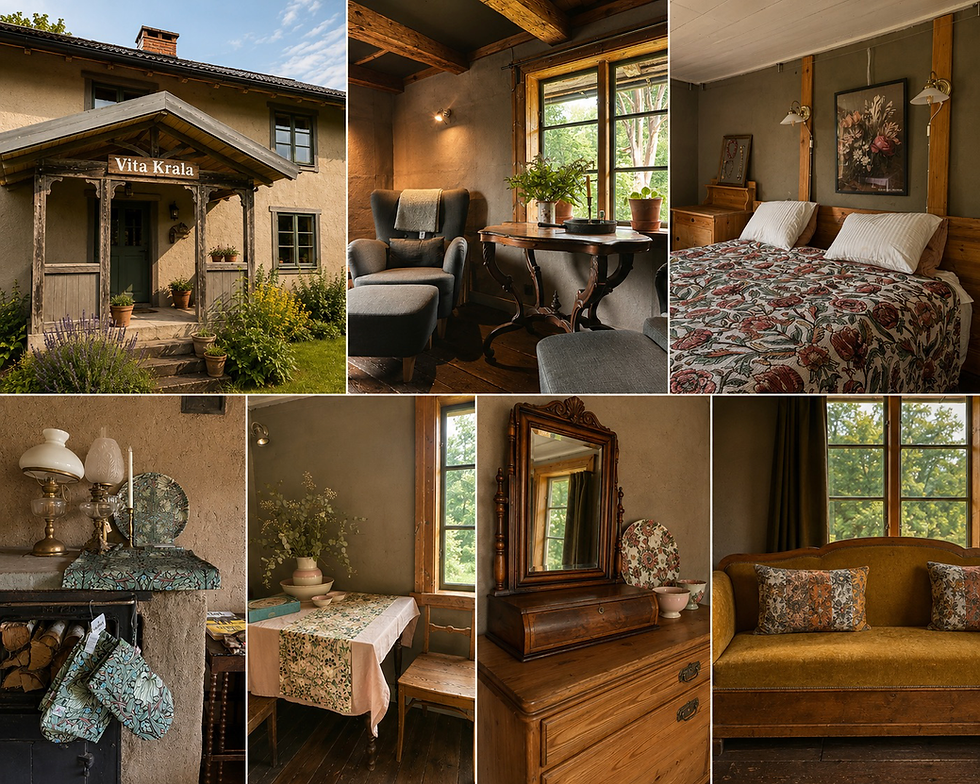
This is why, in my own building philosophy, I opt for materials and methods that are as natural as possible. I want homes and healing spaces that feel grounded, breathable, simple, and alive.
Natural plasters. Clay. Lime. Stone. Wood. Wool. Earth. Fresh air. Sunlight. Good drainage. Clean water. Minimal synthetic materials. Spaces that work with nature rather than against it.
To me, this is not just design. It is wellness.
Mold as a Messenger
I no longer see mold as the enemy.
I see it as a messenger.
Mold tells us that something in the environment is out of balance. There is moisture where there should not be moisture. There is stagnation where there should be airflow. There may be toxic materials, poor drainage, trapped humidity, or a building system that is not working with nature.
And when someone becomes symptomatic in that environment, their body may also be showing us that something in their internal terrain needs support.
The solution is not fear.
The solution is not obsessing over invisible enemies.
The solution is to restore the terrain — both inside the body and inside the home.
Clean air. Natural materials. Nourishing food. Nervous system regulation. Emotional resolution. Sunlight. Movement. Minerals. Simplicity. Less toxicity. More life.
This is the future of healing.
Not just treating the person.
Not just remediating the building.
But understanding the relationship between the body, the home, and the living terrain of both.
Begin With Your Own Terrain
If this resonates with you, and you feel like your body has been trying to tell you something that no one has been able to fully explain, I invite you to begin with a Free Intuitive Health Assessment.
This is a gentle, personalized starting point where I look at the deeper terrain of what may be contributing to your symptoms — including toxicity, stagnation, nervous system stress, environmental burdens, emotional patterns, and the conditions of your home and lifestyle.
Rather than chasing labels or fearing pathogens, we begin by asking:
What is your body responding to?
What is your environment asking you to notice?
And what conditions would help your body feel safe enough to heal?


Comments