

Riggins Hot Springs: A Conservation Opportunity for Recovery, Public Access, and Healing in Nature

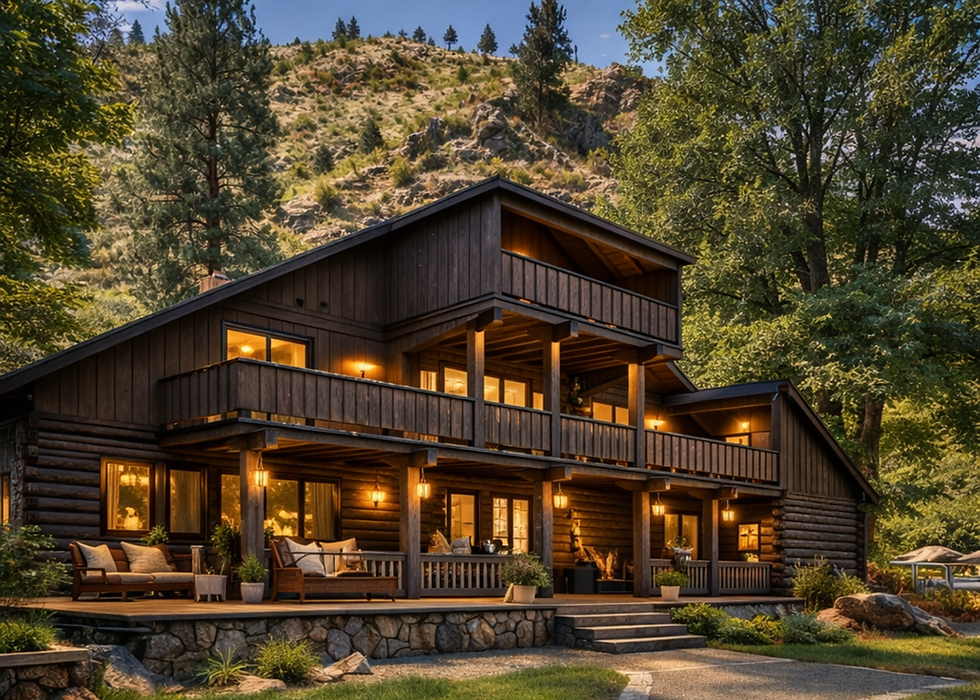
Every once in a while, a property comes along that is more than real estate.
It is a place with memory.
A place with water.
A place with healing potential.
A place that could serve not just one owner, but an entire community — and perhaps generations of people who need nature, stillness, work, restoration, and a way back to themselves.
Riggins Hot Springs is one of those places.
Tucked into the Salmon River country of Idaho, this historic hot springs property represents something rare: geothermal water, river access, retreat infrastructure, wild landscape, and proximity to one of the most powerful outdoor recreation corridors in the state.
In a time when so much land is being bought, closed off, subdivided, or turned into private luxury escape space, Riggins Hot Springs offers a different possibility.
What if this land could be preserved?
What if it could remain open in a thoughtful, protected way?
What if it could become a sanctuary for healing, recovery, stewardship, clean living, and public access?

A Rare Opportunity in the Salmon River Corridor
Riggins is already known as one of Idaho’s great outdoor recreation communities. It sits at the meeting point of river culture, mountain access, backcountry adventure, fishing, rafting, hunting, hiking, hot springs, and the wild beauty of the Salmon River corridor.
Riggins Hot Springs carries the possibility of becoming a meaningful anchor within that landscape.
This property could become more than a private retreat. It could become a protected public-benefit property that supports conservation, recreation, recovery, rural tourism, land stewardship, and healing in nature.
The recent opening of Twin Peaks Ranch State Park near Salmon shows that Idaho is willing to look at former private ranch and retreat properties as future public recreation assets. That project is a beautiful example of how land with history, lodging, natural beauty, and outdoor access can be transitioned into something that serves the wider public.
Riggins Hot Springs may hold a similar kind of potential.
This does not mean there is only one path forward.
A project like this could involve a public agency, a private conservation buyer, a land trust, a foundation, a donor-advised fund, a retreat-based nonprofit, an Opportunity Zone investor, or a partnership between several of these.
The right conservation partner could help protect the land while allowing it to serve the public in a structured, values-aligned way.
The vision is not mass tourism.
The vision is not party culture.
The vision is not another commercialized hot springs destination.
The vision is sanctuary.
A Different Kind of Public Access
Public access does not have to mean unregulated access.
There is another way.
Riggins Hot Springs could be held as a protected healing and recreation property with clear agreements around how the land is used.
The values could be simple:
No alcohol.
No drugs.
No processed foods.
No chemical-heavy use of the land.
No disrespect of the water, the soil, the wildlife, or the quiet.
This kind of boundary is not exclusionary. It is protective.
Many people in recovery cannot truly rest in spaces where alcohol, drugs, noise, and processed food culture are normalized. For someone coming out of addiction, incarceration, grief, burnout, trauma, or nervous system collapse, the environment matters.
The land itself can either support healing or constantly pull someone back into dysregulation.
A sanctuary model would create a different kind of container — one where the property is held with reverence, where food is clean, where the nervous system can settle, and where people can reconnect to nature, work, prayer, water, and purpose.

Recovery Through Nature, Work, and Belonging
One of the most meaningful possibilities for this project is creating pathways for men coming out of jail, addiction, or hard life chapters to have dignified work, structure, and a place to rebuild.
So many people are released from incarceration with very little support.
They need more than a bed.
They need rhythm.
They need responsibility.
They need mentorship.
They need meaningful work.
They need a place where their hands are useful and their nervous system can begin to repair.
A property like Riggins Hot Springs could create seasonal or structured work opportunities in land stewardship, trail care, gardening, food preparation, maintenance, firewood, natural building, hospitality, cleaning, restoration, and groundskeeping.
This would not be charity in the disempowering sense.
It would be participation.
It would be responsibility.
It would be belonging.
It would be the restoration of a place — and through restoring the land, people often begin restoring themselves.
The Role of Sanctuary Services
Through Sanctuary Services and Sanctuary Trust, the larger vision has always been rooted in the relationship between land, healing, and restoration.
The body heals better when the environment is supportive.
The nervous system heals better in nature.
People recover more deeply when they are removed from chaos and placed inside rhythm, beauty, nourishment, purpose, and reverence.
A property like Riggins Hot Springs could become a living expression of that philosophy.
Possible programming could include:
• Nature-based recovery retreats
• Nervous system restoration retreats
• Clean food and mineral water resets
• Stewardship-based work opportunities
• Men’s reentry work programs
• Women’s healing retreats
• Grief and end-of-life family respite
• Prayer, fasting, and quiet retreat space
• Educational workshops on land, water, food, natural building, and restoration
• Partnerships with local outfitters, guides, healers, builders, farmers, conservation groups, and community organizations
This would be non-medical, land-based, and deeply practical.
The point would not be to create a treatment center in the conventional sense.
The point would be to create a protected environment where healing becomes possible because the conditions are right.

Conservation, Opportunity Zone Potential, and Legacy Benefits
Riggins is located within a designated Opportunity Zone, which may create additional tax-incentive possibilities for qualified investors or funds, depending on how a project is structured.
Combined with potential conservation, charitable, nonprofit, or public-benefit structures, this makes the property especially worth exploring with qualified legal, tax, and conservation professionals.
For the right conservation buyer, donor, foundation, investor, or public-private partner, a project like this may carry significant financial and legacy benefits.
Depending on the structure, there may be opportunities involving conservation easements, charitable contributions, nonprofit ownership, land trust partnerships, public-benefit use, Opportunity Zone investment, or other tax-advantaged models.
Those details would need to be evaluated carefully by qualified legal, tax, and conservation professionals.
But the larger point is this:
There may be a way for someone to help preserve an extraordinary Idaho property, receive meaningful tax and financial guidance, and leave behind a legacy that benefits the land, the community, and people in need of restoration.
That is the kind of wealth stewardship our time is asking for.
Not just ownership.
But protection.
Not just investment.
But legacy.
Why This Matters Now
Land like this does not come around often.
Hot springs properties with water, lodging, natural beauty, river access, and retreat infrastructure are increasingly rare. Once they are sold into purely private hands, the public-benefit potential can disappear for generations.
Riggins Hot Springs could become a model for something different.
A place where conservation and recovery meet.
A place where clean living is protected.
A place where public access is intentional, not careless.
A place where men coming out of jail can work with dignity.
A place where people in recovery can soak, breathe, pray, eat clean food, and remember that they are part of life again.
A place where land is not extracted from, but cared for.
A place where healing is not forced, but allowed.

A Call for the Right Partner
This vision is still forming.
It may involve Idaho Parks and Recreation.
It may involve a private conservation buyer.
It may involve a land trust or foundation.
It may involve a public-private partnership.
It may involve an Opportunity Zone investor who understands that true return is not only financial.
It may involve a group of aligned people who understand that land like this should not be lost to short-term thinking.
What matters now is opening the conversation.
Riggins Hot Springs has the potential to become more than a private retreat.
It could become a sanctuary for clean living, recovery, public access, stewardship, and nature-based healing.
It could support the Riggins community.
It could protect a special piece of Idaho.
It could give people coming out of hard chapters a place to work, breathe, soak, pray, rebuild, and remember who they are.
If you are a conservation buyer, land trust, foundation, public agency, donor, investor, or community partner who feels called to help preserve a place like this, I would love to begin the conversation.
Some properties should not simply be sold.
Some properties should be entrusted.
Riggins Hot Springs may be one of them.


Comments